
Introduction
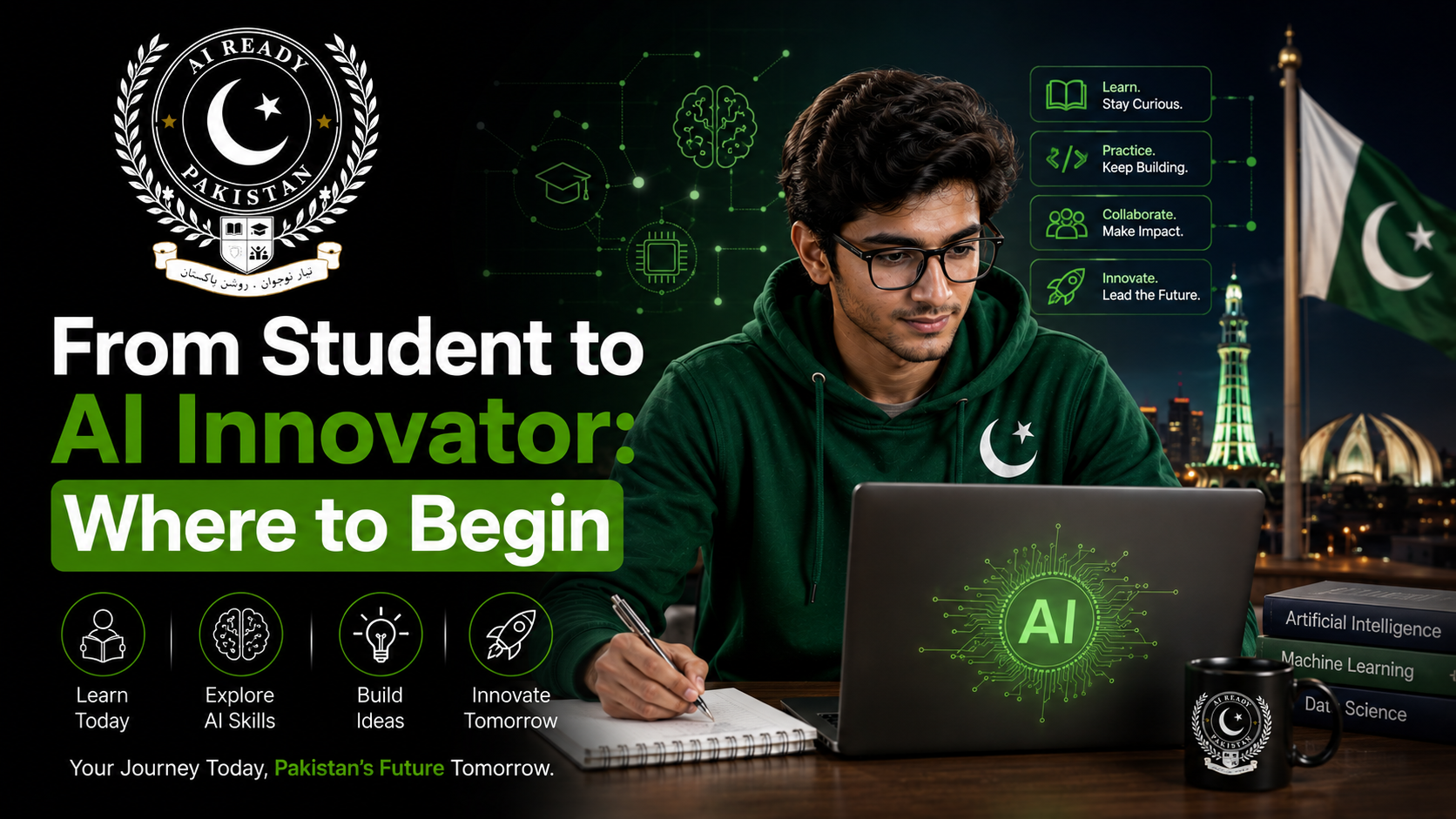
AI isn’t just for scientists and big corporations anymore. It’s already part of everyday life, how we study, communicate, and solve problems. From personalized learning to healthcare diagnostics, AI is reshaping every industry. In this shifting world, students have a real opportunity: not just to learn about AI, but to become innovators who use it to build meaningful solutions.
You don’t need a computer science degree or years of coding experience to get started. It begins with curiosity, creativity, and a willingness to actually try solving real problems.
What Does It Mean to Be an AI Innovator?
An AI innovator uses AI to solve practical challenges or improve how things work. Innovation isn’t about inventing complex new technology from scratch, it’s about spotting a real problem and finding a smarter way to address it with the tools already available.
For students, this means going beyond just using ChatGPT or image generators. It means understanding how AI actually works, knowing its limits, and applying it responsibly. It starts with simple questions: How can AI make learning easier? Could it help farmers, teachers, or small businesses? What everyday problem could I actually solve with this?
Every real innovation starts with a problem worth solving, not a fancy tool looking for a use case.
Why Students Are Well-Positioned for This
Students have real advantages here. They’re naturally curious education is built around questioning and experimenting. They also have access to countless free resources: Google’s AI learning materials, Microsoft Learn, Coursera, edX, and Kaggle all offer free or affordable courses.
And students have room to experiment without the pressure businesses face they can try things, fail, adjust, and try again without major consequences.
The World Economic Forum lists analytical thinking, creativity, technological literacy, and lifelong learning among the most important future workforce skills — and AI education happens to build all of them at once. UNESCO similarly emphasizes that AI literacy is becoming essential for learners everywhere.
The Core Skills Every AI Innovator Needs
Problem-Solving – Technology only matters when it solves something real. Practice spotting actual challenges around you before jumping to a solution.
Creativity – AI doesn’t replace creative thinking, it amplifies it. Combining imagination with AI tools is what leads to genuinely useful applications across education, healthcare, and business.
Curiosity – AI evolves fast. Staying curious about new tools and research is what keeps your skills from going stale.
AI Literacy – Understanding what AI can and can’t do — machine learning basics, data, bias, ethics, helps you use it responsibly instead of misusing it by accident.
Turning Ideas Into Real Projects
Many students assume they need advanced programming skills before starting. That’s not true, innovation usually starts small. A few realistic starting points:
- An AI chatbot that answers common university FAQs
- An AI study planner that organizes revision schedules
- An AI resume assistant for fresh graduates
- A simple image recognition tool that identifies plant diseases
- Using AI to summarize lecture notes or generate quizzes
The goal isn’t perfection, it’s practical experience. Every finished project builds real skill and adds something genuine to your portfolio.
Experimentation and Collaboration Matter
Innovation rarely happens alone. The strongest AI solutions usually come from people combining different skills and perspectives, through AI clubs, hackathons, open-source communities, or research projects.
Experimentation matters just as much. Every failed attempt teaches something. What separates real innovators from casual learners isn’t avoiding failure, it’s being willing to test, adjust, and try again.
Make Learning a Habit, Not a One-Time Thing
AI changes fast, new tools and models appear constantly. Staying current means reading AI blogs, following trustworthy sources, practicing with free tools regularly, and sharing your work on LinkedIn or GitHub as you go. Over time, that consistency is what actually turns knowledge into real expertise.
Practical Steps to Start Today
You don’t need expensive equipment or advanced qualifications to begin:
- Learn AI fundamentals with AI Ready Pakistan
- Explore beginner-friendly tools like ChatGPT, Gemini, or Copilot
- Pick one real-world problem that genuinely interests you
- Build a small project using available AI platforms
- Document your progress on LinkedIn, GitHub, or a personal portfolio
- Join AI communities, workshops, and hackathons
- Get feedback from mentors and peers
- Keep improving instead of waiting for the “perfect” version
Consistency beats complexity a few small, finished projects build more real skill than one ambitious idea that never gets done.
Conclusion: Become Part of the AI Generation
AI is creating opportunities unlike any technological shift before it. Students who start learning today will become tomorrow’s innovators, entrepreneurs, and leaders.
You don’t need to know everything before you begin. Start with curiosity, build practical skills, and keep learning. Every small project brings you a step closer to being an AI innovator.
AI Ready Pakistan is helping students step into this future through AI education, innovation, and entrepreneurship across the country. The future belongs to those willing to learn, create, and start today.
About AI Ready Pakistan
Our mission is to make every student AI-ready and professionally competitive in today’s world, through limited scholarship-based training for 1,000+ students, led by top trainers.
📩 Get Involved:
🔹 Join the Advisory Council → https://forms.gle/Hj76iXs3MkNcyabz9
🔹Become a Support Partner → https://forms.gle/q1YKKwUaUY5mps7W6
📧 aireadypakistan@gmail.com | 📞 +92 315 9103387