
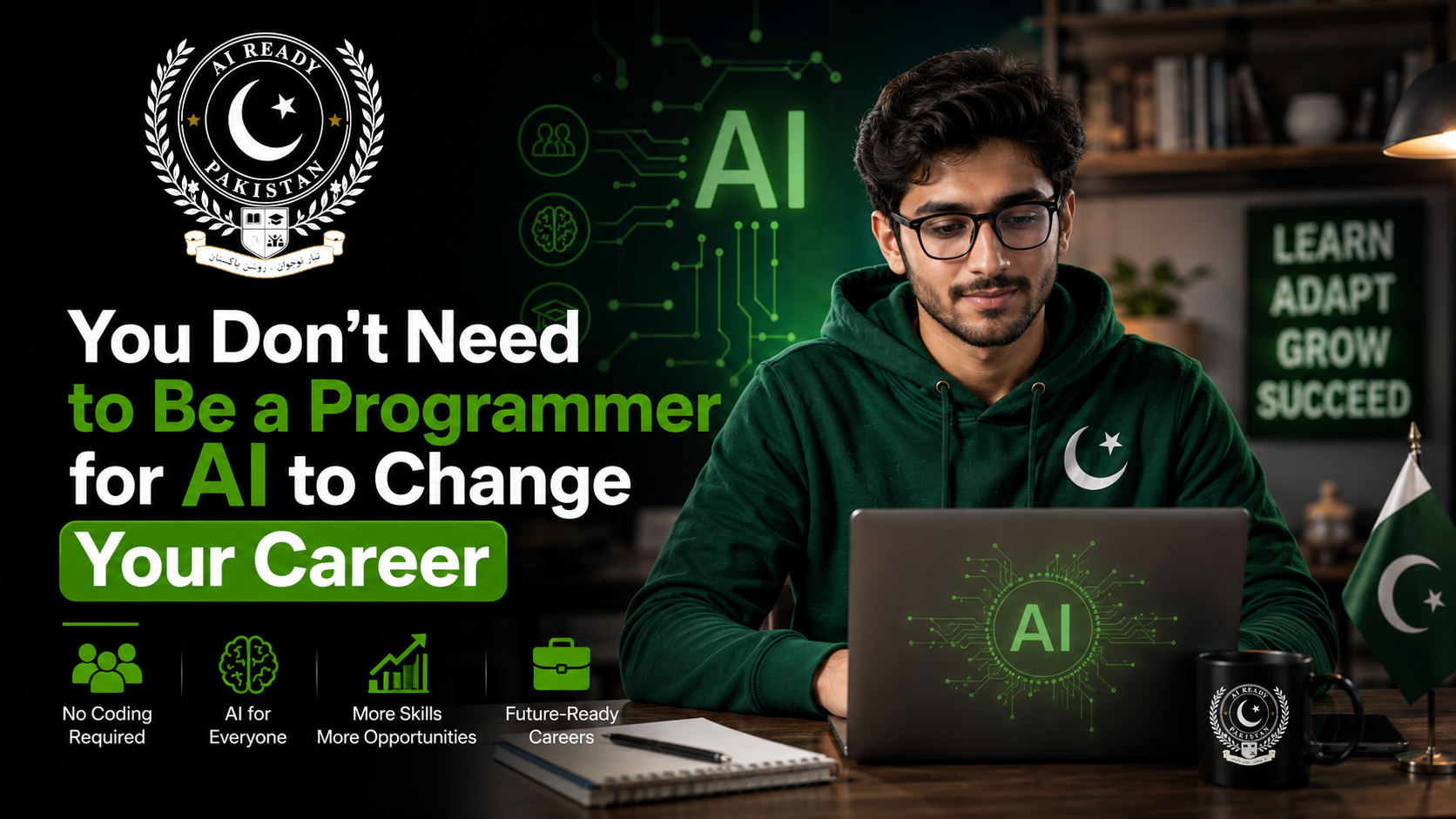
Quick question: when you hear “AI,” do you picture a coder hunched over a screen? If so, you’re thinking about it wrong, and it might be costing you an advantage you don’t even know you’re missing.
Here’s the thing: AI has quietly stopped being a “tech people” thing. Whether you’re studying business, medicine, education, media, law, or engineering, AI is already showing up in your field, and the students who figure this out early are the ones who’ll have real options later.
AI isn’t here to replace you. It’s here to make you faster, sharper, and honestly, a little more capable than you’d be without it.
If You’re in Business: AI Makes Your Decisions Smarter
Imagine trying to predict what customers want without any data to back it up. That used to be half of business strategy: educated guessing. Now, AI can analyze market trends and customer behavior in a fraction of the time it used to take.
If you’re heading into marketing, finance, or entrepreneurship, this matters a lot. AI can help with market research, financial forecasting, and even automate customer support, which is exactly why so many entrepreneurs are now building startups with a fraction of the resources they’d have needed a decade ago. AI isn’t taking business jobs. It’s just making the people doing them faster and better informed.
If You’re in Medicine: AI Is Already in the Room With You
Doctors are using AI to read medical scans, catch disease patterns earlier, and support diagnosis not as a gimmick, but as a genuinely useful second set of eyes. If you’re a medical student, you can already use AI to summarize dense research papers and practice clinical decision-making before you’re even the one making real calls.
But here’s what won’t change: patients don’t trust a screen. They trust a person. AI can support the science; the empathy and judgment part is still entirely yours.
If You’re in Education: You Could Be the Teacher AI Actually Helps
Personalized learning used to be a nice idea nobody could actually execute for 30 students at once. Now AI can give students instant feedback and tailor study plans to how fast they learn.
If you’re studying to become a teacher, this is your advantage: you can build lesson plans and quizzes faster, and actually spot which students are quietly falling behind before it becomes a bigger problem. You get to be the kind of educator who blends real teaching skill with tools that used to not exist.
If You’re in Media: AI Won’t Tell Your Story, But It’ll Help You Tell It Faster
If you’re going into journalism, content, or media, you’ve probably already used an AI tool without thinking twice about it: brainstorming, editing, subtitles, translation. It’s a real productivity boost.
But here’s the line that matters: storytelling, ethics, and the judgment to know what’s actually worth reporting that’s still on you. AI is a great assistant. It’s a terrible replacement for a real point of view.
If You’re in Law: Less Time Searching, More Time Arguing
Lawyers spend a stupid amount of time buried in case documents and precedent searches. AI can now do that grunt work summarizing, searching, flagging what’s relevant in a fraction of the time.
That means more time for what actually matters in law: strategy, negotiation, representing your client well. If you understand both legal principles and how to use AI well, you’re already ahead of a lot of the field.
If You’re in Engineering: Build Smarter, Not Just Harder
Whether it’s predicting when equipment might fail, designing smarter infrastructure, or monitoring environmental changes, AI is helping engineers across every specialty solve problems faster. Civil, mechanical, electrical, environmental it doesn’t matter which lane you’re in; AI is already part of the toolkit.
Here’s Why This Actually Matters for Your Career
The job market isn’t waiting for anyone. Employers want people who know their field and know how to use modern digital tools well. That combination, not either one alone, is what actually stands out on a resume now.
The Skills Worth Building, No Matter Your Major
You don’t need a computer science degree to build these:
- Basic AI literacy – knowing what it’s good at and where it fails
- Prompt engineering – actually knowing how to ask AI for what you need
- Critical thinking – because AI gets things wrong, confidently
- Data literacy – reading and interpreting information well
- Creativity and problem-solving
- Digital ethics and privacy awareness
- A willingness to keep learning as things change
The Numbers Back This Up
The World Economic Forum expects AI to help create 170 million new jobs by 2030, even while 92 million jobs shift or disappear, a net gain of 78 million jobs globally. Most employers (77%) say they’re actively planning to upskill their teams for this shift, and 63% already see skill gaps as their biggest challenge.
Universities are catching on too; AI is showing up in medical, engineering, and business curricula now, not just computer science departments.
So, Where Does This Leave You?
AI isn’t reserved for people who code. It’s already reshaping business, medicine, education, media, law, and engineering quietly, in the background, whether you’ve noticed or not.
The students who’ll do well aren’t necessarily the smartest in the room. They’re the ones who combine what they’re actually studying with the ability to use AI well. That’s it. That’s the advantage.
The future doesn’t belong to people who are scared of AI, or people who blindly rely on it. It belongs to the ones who learn to use it responsibly, and on their own terms.
About AI Ready Pakistan
Our mission is to make every student AI-ready and professionally competitive in today’s world through limited scholarship-based training for 1,000+ students, led by top trainers.
📩 Get Involved:
🔹 Join the Trainings → https://forms.gle/aY81cQAHesNMeHTq5
🔹 Become a Trainer → https://forms.gle/v9BMrW9EMsWJPQwf7
🔹 Join the Advisory Council → https://forms.gle/Hj76iXs3MkNcyabz9
🔹 Become a Support Partner → https://forms.gle/q1YKKwUaUY5mps7W6
📧 aireadypakistan@gmail.com | 📞 +92 315 9103387